Overview of Emotional Intelligence
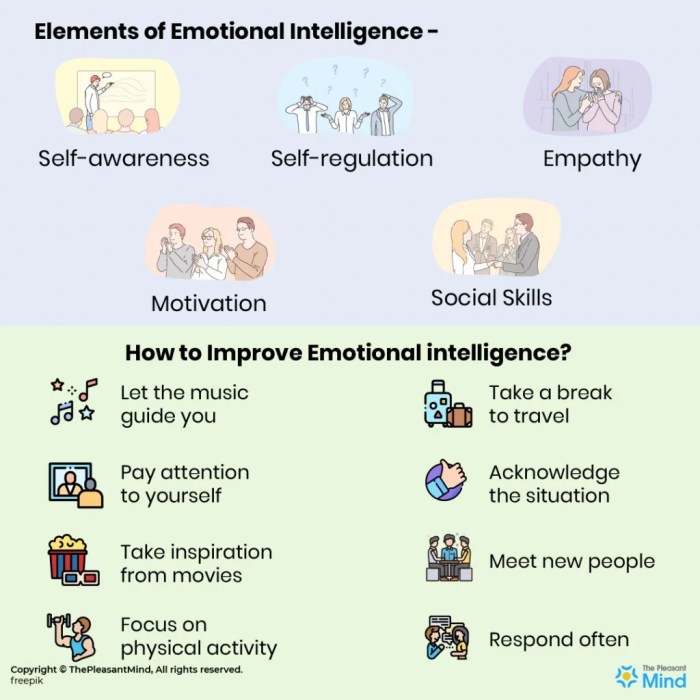
Emotional intelligence refers to the ability to recognize, understand, and manage our own emotions, as well as the emotions of others. It plays a crucial role in personal development, impacting various aspects of our lives such as relationships, work performance, and overall well-being.
Components of Emotional Intelligence
- Self-awareness: This involves recognizing and understanding your own emotions, as well as their impact on your thoughts and behavior.
- Self-regulation: The ability to control and manage your emotions, impulses, and reactions in different situations.
- Motivation: Being able to set and work towards goals with enthusiasm and persistence, even in the face of challenges.
- Empathy: Understanding and considering the feelings and perspectives of others, fostering better communication and relationships.
- Social skills: The ability to build and maintain positive relationships, communicate effectively, and work well in a team.
Strategies for Enhancing Emotional Intelligence
Strategies for enhancing emotional intelligence – Enhancing emotional intelligence involves a variety of strategies that can improve self-awareness, self-regulation, empathy, and social skills. By implementing these strategies, individuals can navigate challenging situations more effectively and build stronger relationships with others.
Explore Mindfulness Techniques
Mindfulness techniques are powerful tools for enhancing emotional intelligence, as they help individuals cultivate self-awareness and self-regulation. By practicing mindfulness through activities like meditation, deep breathing exercises, and body scans, individuals can develop a greater sense of emotional awareness and control.
Developing Empathy and Social Skills
Building empathy and enhancing social skills are essential components of emotional intelligence. To develop empathy, individuals can actively listen to others, practice perspective-taking, and show compassion towards different viewpoints. Social skills can be improved through effective communication, conflict resolution, and building strong connections with others.
Practicing Emotional Intelligence in Challenging Situations
One of the best ways to enhance emotional intelligence is by practicing it in challenging situations. This can involve remaining calm under pressure, managing emotions effectively, and finding constructive solutions to conflicts. By applying emotional intelligence skills in real-life scenarios, individuals can strengthen their ability to navigate complex emotions and relationships.
Incorporating Emotional Intelligence in Daily Life: Strategies For Enhancing Emotional Intelligence
Emotional intelligence plays a crucial role in our daily interactions and decision-making processes. By incorporating emotional intelligence in our daily lives, we can improve our relationships, handle conflicts effectively, and enhance our overall well-being.
Ways to Incorporate Emotional Intelligence in Communication with Others
Effective communication is key to building strong relationships. Here are some ways to incorporate emotional intelligence in your communication with others:
- Practice active listening to understand the emotions and perspectives of others.
- Express empathy and validate the feelings of others to create a supportive environment.
- Be aware of your own emotions and how they may influence your communication.
- Use assertive communication to express your thoughts and feelings clearly and respectfully.
Role of Emotional Intelligence in Conflict Resolution and Problem-Solving
Emotional intelligence plays a crucial role in resolving conflicts and finding effective solutions to problems. Here’s how emotional intelligence can aid in conflict resolution and problem-solving:
- Manage emotions effectively to stay calm and rational during conflicts.
- Empathize with others to understand their perspectives and find common ground.
- Use problem-solving skills to address underlying issues and find mutually beneficial solutions.
- Communicate openly and honestly to resolve conflicts and prevent misunderstandings.
Practical Exercises to Strengthen Emotional Intelligence on a Day-to-Day Basis
Strengthening emotional intelligence requires consistent practice. Here are some practical exercises to enhance your emotional intelligence on a daily basis:
- Keep a journal to reflect on your emotions, triggers, and reactions in different situations.
- Practice mindfulness and meditation to increase self-awareness and emotional regulation.
- Engage in role-playing scenarios to practice empathy, active listening, and conflict resolution skills.
- Seek feedback from others to gain insights into how your emotions impact your relationships and interactions.
Emotional Intelligence and Mental Health
Emotional intelligence plays a crucial role in mental well-being by helping individuals understand and manage their emotions effectively. By developing emotional intelligence, individuals can enhance their ability to cope with stress, anxiety, and other mental health issues.
Managing Stress
- Recognizing triggers: Emotional intelligence enables individuals to identify the factors that contribute to their stress levels, allowing them to address them proactively.
- Effective communication: By improving emotional intelligence, individuals can express their feelings and concerns in a healthy manner, reducing internalized stress.
- Problem-solving skills: Emotional intelligence enhances problem-solving abilities, enabling individuals to find constructive solutions to stressful situations.
Handling Anxiety
- Emotional awareness: Developing emotional intelligence helps individuals become more aware of their anxious thoughts and feelings, allowing them to address them before escalating.
- Mindfulness practices: Practicing mindfulness can be a valuable tool in improving emotional intelligence and managing anxiety effectively.
- Self-regulation: Emotional intelligence empowers individuals to regulate their emotions and reactions, reducing anxiety levels and promoting a sense of calm.
Additional Resources
For individuals looking to enhance their emotional intelligence for better mental health, resources such as therapy, workshops, and self-help books can be beneficial.
Practicing daily meditation, journaling, and seeking support from mental health professionals are also valuable strategies in improving emotional intelligence.
Cultivating Emotional Intelligence in Different Settings
Emotional intelligence plays a crucial role in various settings, including the workplace, personal relationships, social interactions, and educational environments. By understanding and enhancing emotional intelligence, individuals can navigate these different settings more effectively and build stronger connections with others.
Enhancing Emotional Intelligence in the Workplace, Strategies for enhancing emotional intelligence
- Practice active listening to understand colleagues’ perspectives and emotions.
- Develop empathy by putting yourself in others’ shoes and considering their feelings.
- Manage stress and emotions effectively to maintain a positive work environment.
- Communicate openly and honestly to build trust and rapport with coworkers.
- Seek feedback from others to gain insights into how your emotions impact the workplace.
Improving Emotional Intelligence in Personal Relationships and Social Interactions
- Express emotions openly and honestly to foster deeper connections with loved ones.
- Practice patience and understanding in conflicts to resolve issues peacefully.
- Develop strong communication skills to convey emotions effectively in personal relationships.
- Recognize and regulate your own emotions to avoid unnecessary misunderstandings.
- Empathize with others to strengthen relationships and build a supportive social network.
Applying Emotional Intelligence in Educational Settings for Better Learning Outcomes
- Encourage a positive and supportive classroom environment to enhance students’ emotional well-being.
- Teach students self-awareness and self-regulation techniques to manage their emotions effectively.
- Promote empathy and understanding among students to foster a culture of respect and cooperation.
- Provide opportunities for students to practice emotional intelligence through group projects and discussions.
- Support educators in developing their emotional intelligence to better connect with students and create a conducive learning environment.
Integrating Emotional Intelligence with Wellness Practices
Emotional intelligence plays a crucial role in contributing to overall wellness and health by helping individuals effectively manage their emotions, navigate social interactions, and cope with stress. When emotional intelligence is integrated with wellness practices, it can lead to improved mental, emotional, and physical well-being.
Benefits of Integrating Emotional Intelligence with Wellness Practices
- Enhanced Stress Management: By developing emotional intelligence, individuals can better understand their emotions and respond to stress in a healthy manner, leading to reduced stress levels and improved overall well-being.
- Improved Relationships: Emotional intelligence fosters better communication, empathy, and conflict resolution skills, which are essential for building and maintaining healthy relationships with others.
- Increased Resilience: Building emotional intelligence can enhance resilience, helping individuals bounce back from setbacks and adapt to challenging situations effectively.
Examples of Emotional Intelligence Enhancing Wellness Programs
- Emotional Intelligence Workshops: Organizations can conduct workshops to help employees develop emotional intelligence skills, leading to a more positive work environment and improved mental health.
- Mindfulness Practices: Incorporating mindfulness meditation and other relaxation techniques in wellness programs can enhance emotional intelligence by promoting self-awareness and emotional regulation.
- Emotional Intelligence Assessments: Wellness programs can include assessments to measure emotional intelligence levels and provide individuals with personalized strategies for improvement.
Importance of Emotional Intelligence in Maintaining a Healthy Mind and Body
Emotional intelligence is vital for maintaining a healthy mind and body as it allows individuals to recognize and manage their emotions effectively, make informed decisions, and establish positive relationships. By prioritizing emotional intelligence in wellness practices, individuals can experience greater well-being and a more balanced lifestyle.
Role of Emotional Intelligence in Health Coaching
Emotional intelligence plays a crucial role in the field of health coaching, contributing to better outcomes for both coaches and their clients. Health coaches who possess high emotional intelligence skills can create a supportive and empathetic environment, leading to more effective coaching sessions.
Benefits of Emotional Intelligence for Health Coaches and Clients
- Improved communication: Health coaches with high emotional intelligence can communicate effectively with their clients, understanding their emotional needs and concerns.
- Enhanced empathy: Emotional intelligence enables health coaches to empathize with their clients, building trust and rapport.
- Better stress management: Coaches who are emotionally intelligent can help clients navigate stress and emotional challenges, leading to improved overall well-being.
Success Stories of Emotional Intelligence Coaching in Health
- Case study: A client struggling with weight loss found success through a health coach who incorporated emotional intelligence techniques. By addressing underlying emotional issues, the client was able to make sustainable lifestyle changes.
- Testimonial: Another client dealing with chronic pain reported significant improvements in their condition after working with a health coach who integrated emotional intelligence strategies into their sessions.
Impact of Emotional Intelligence on Fitness Goals
Emotional intelligence plays a crucial role in achieving fitness goals as it helps individuals manage their emotions, stay motivated, and overcome obstacles in their fitness journey.
Relationship between Emotional Intelligence and Achieving Fitness Goals
- Individuals with high emotional intelligence are better able to set realistic fitness goals and manage their expectations.
- Emotional intelligence helps individuals cope with setbacks and stay committed to their fitness routines.
- Being aware of their emotions allows individuals to make healthier choices and prioritize their fitness goals.
Strategies for Using Emotional Intelligence to Stay Motivated
- Practice mindfulness to stay present and focused during workouts.
- Use positive self-talk to boost confidence and motivation.
- Set achievable goals and celebrate small victories along the way.
Overcoming Obstacles in Fitness Journey with Emotional Intelligence
- Recognize and manage stress to prevent emotional eating or skipping workouts.
- Seek support from friends, family, or a fitness coach to stay accountable and motivated.
- Practice self-compassion and forgive yourself for any slip-ups in your fitness routine.
User Queries
How can I improve self-awareness through mindfulness techniques?
Practicing mindfulness meditation and focusing on the present moment can help enhance self-awareness.
What are some ways to incorporate emotional intelligence in communication?
Active listening, understanding non-verbal cues, and expressing empathy are effective ways to enhance emotional intelligence in communication.
How does emotional intelligence contribute to overall wellness?
Emotional intelligence helps individuals manage stress, improve mental well-being, and maintain a healthy mind and body, leading to overall wellness.


More Stories